Outer Space to Inner Space: Navigating Networks
I learned to program in Fortran, when I was 14, in an NYU Aerospace Engineering lab, where I also constructed what looked like a swing set for kids. So, I learned crimping and threading with copper pipes. This was my first instance of project based learning. When I taught at the university, I had the best feelings of doing something significant in the lab classes that I taught. In psychophysics, students learn that our perception of brightness of a given object changes as a function of the brightness of the context surrounding that object. In an experimental psychology lab class I taught in 1985, I the first to introduce the use of tools on a Mac for statistics. Countless studies have shown that retention and understanding are produced more effectively by project based learning.
Our courses are designed to be part of a project for your organization or community.


Project-Based Learning
PBL- an active, student-centered teaching method where learners investigate and solve real-world problems over an extended period. Instead of just memorizing facts, students develop deep content knowledge and crucial skills like critical thinking, collaboration, and project management
Inner Space
PhD, Cognitive Psychology & Post Doctoral Fellow, Cognitive Neuroscience
University of Michigan, Ann Arbor
When I began graduate school in 1976, my professors were writing programs in Lisp to play the Chinese game of Go. I used an Apple II computer to digitize analog signals from physiological recording equipment as part of my dissertation and wrote and NIMH grant that funded my research, as I directed a cognitive psychophysiology lab with a staff of six.
Here are a few well-established ideas in cognitive psychology that later got operationalized in note-graph tools for AI.
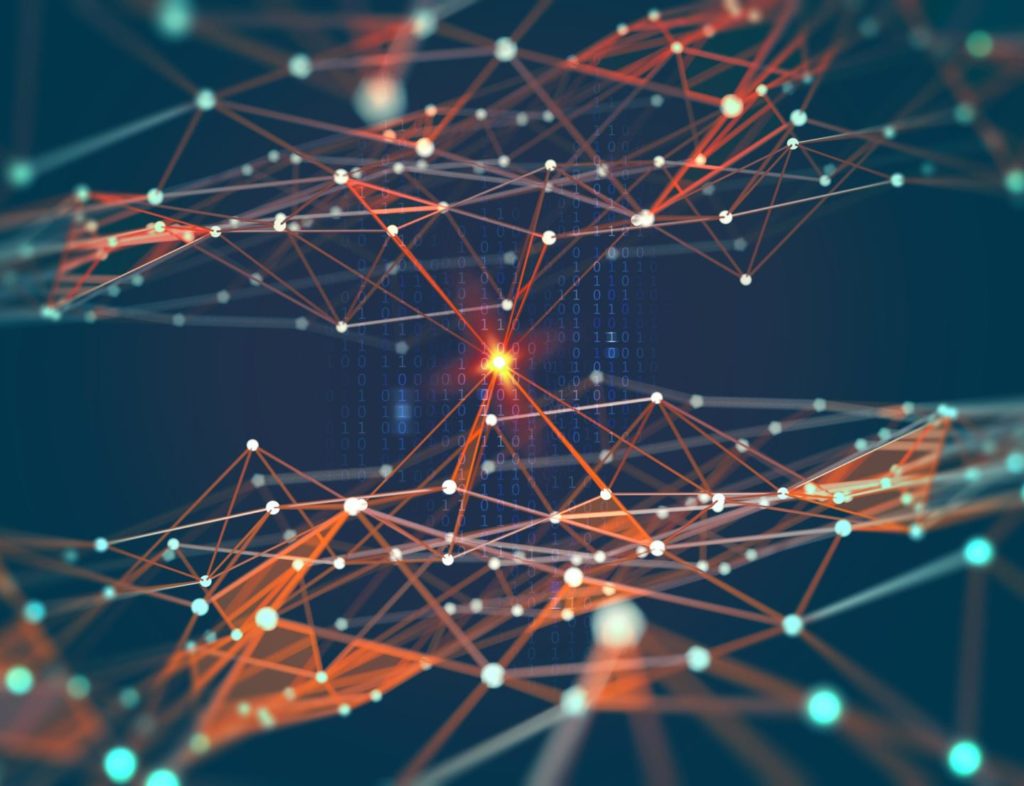
Semantic networks (Collins & Quillian, 1969; Collins & Loftus, 1975). The foundational model proposed that long-term semantic memory is organized as a network of concept nodes connected by labeled links (e.g., “is-a,” “has-property”). Retrieval works by spreading activation: stimulating one node propagates activation along its links to related nodes, which is why priming one concept speeds recognition of associated ones. This node-and-edge picture is the direct conceptual ancestor of any graph view of notes — atomic concepts as nodes, relationships as edges.
Associationism and the strength of connections. Memor all right.y research treats links as weighted, not binary — frequently co-activated concepts have stronger associative bonds. Graph tools approximate this with link density and clustering: the more a note is referenced, the more central (hub-like) it becomes.
Schemas and chunking (Bartlett; Miller). Knowledge isn’t stored as isolated facts but in structured clusters. The emergent communities/clusters you see in a force-directed graph map loosely onto this — related notes self-organize into visually dense neighborhoods.
How this surfaces in the tools:
- Obsidian makes the semantic network literal. Each note is a node;
[[wikilinks]]and backlinks are the edges. The graph view is essentially a rendered spreading-activation network — you see the associative structure of your own knowledge, and hubs/clusters emerge from link patterns rather than being manually imposed. - Graph-based approaches with Claude Code (graphRAG-style retrieval, or graph plugins) extend this from visualization to traversal. Instead of flat keyword/vector search, a query activates an entry node and the system walks the edges to pull in connected context — a computational analog of spreading activation. The graph constrains and enriches what gets retrieved, much as semantic structure constrains human recall.
The throughline: cognitive psychology described memory as if it were a graph for explanatory reasons; these tools then build the actual graph and let either a human (Obsidian’s visual map) or a model (Claude traversing the structure) exploit it for retrieval. The metaphor became infrastructure.
One caveat worth flagging: the mapping is suggestive, not strict. Human semantic memory is reconstructive, lossy, and context-dependent in ways a static link graph isn’t — so the resemblance is a useful design heuristic rather than a faithful model of cognition.
Consciousness
While many people are debating whether AI can be conscious, they seem to be forgetting that we first need to agree on a definition of what is consciousness. For example, if an AI agent was having an increasingly hard time solving a problem, would it feel a knot in its stomach or a heaviness in its chest?
Do you feel a knot in your stomach when you wonder about the implications of artificial intelligence for your job or your business or your neighborhood? Let us know about a project you are trying to solve and we will build connections for a team, you can join, that would help to solve your problem. Let us know if you would like to get on board and become a part of the same team.